Creator marketing for Education
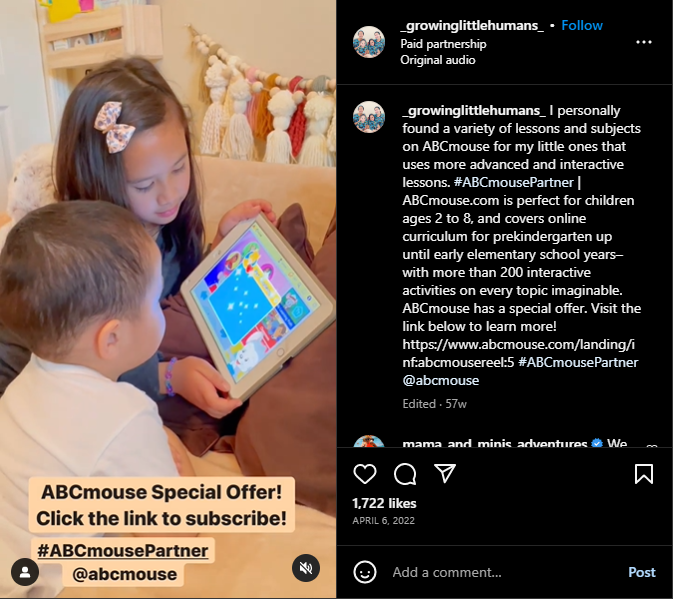
Parents and students make the most convincing advocates. ABCmouse cut acquisition costs 2.3x with influencer-made video.
What Education content has to do
Education marketing has a trust problem before it has a creative one. Parents and students are evaluating something with real consequences, and they discount brand claims accordingly. What they do credit is someone comparable describing their actual experience — a parent whose child used the product, a student who took the course.
The decision also takes time and happens across formats. People watch long-form reviews, read comparisons, and look for evidence that outcomes are real. Short-form content has a role in discovery, but it rarely closes anything on its own in this category.
So the work is sourcing parents, students and educators who can speak credibly from experience, briefing them to demonstrate rather than endorse, and producing content substantial enough to survive the research process a considered decision involves — then putting spend behind the pieces that demonstrably move enrolment.
Results from Education brands
Built for Education
Education is bought by one person for another — a parent for a child, a student for their own future. The decision is cautious, researched, and almost never made on a single advert.
- Parent and educator creator sourcing
- Long-form video for tutorials and reviews
- CPA-focused paid amplification
Creator content in Education
Education questions, answered.
People who have actually used the product in the role the audience occupies — parents, students, teachers. Credibility in this category comes from comparable experience rather than audience size, and a smaller creator with a genuinely relevant story typically persuades more than a larger generic one.
Considerably. Education decisions are researched rather than impulsive, and that research includes reviews, walkthroughs and comparisons that short-form cannot carry. Long-form also keeps earning after the campaign, since it continues to surface in search and to be cited when people ask for recommendations.
By having creators describe their own experience rather than restate outcomes the brand cannot substantiate, and by making disclosure part of the brief rather than an afterthought. In a category where audiences are already sceptical, an overstated claim costs more than it earns.
Ready to grow your Education brand?
See the platform on a short walkthrough tailored to your goals.
Book a demo